Despair, hope, and art
As we approach the end of February, I can finally say it feels like a new year to me. 2026 has brought many questions and internal battles, and I’ve been struggling with the why of it all. The state of our world — rising authoritarianism, inequality, concurrent genocides, etc, etc, etc — has me ruminating on if my work matters, if it does anything to contribute to something better. Things are heavy, I’m often filled with despair, and from conversations with friends and colleagues, I know that I’m not alone.
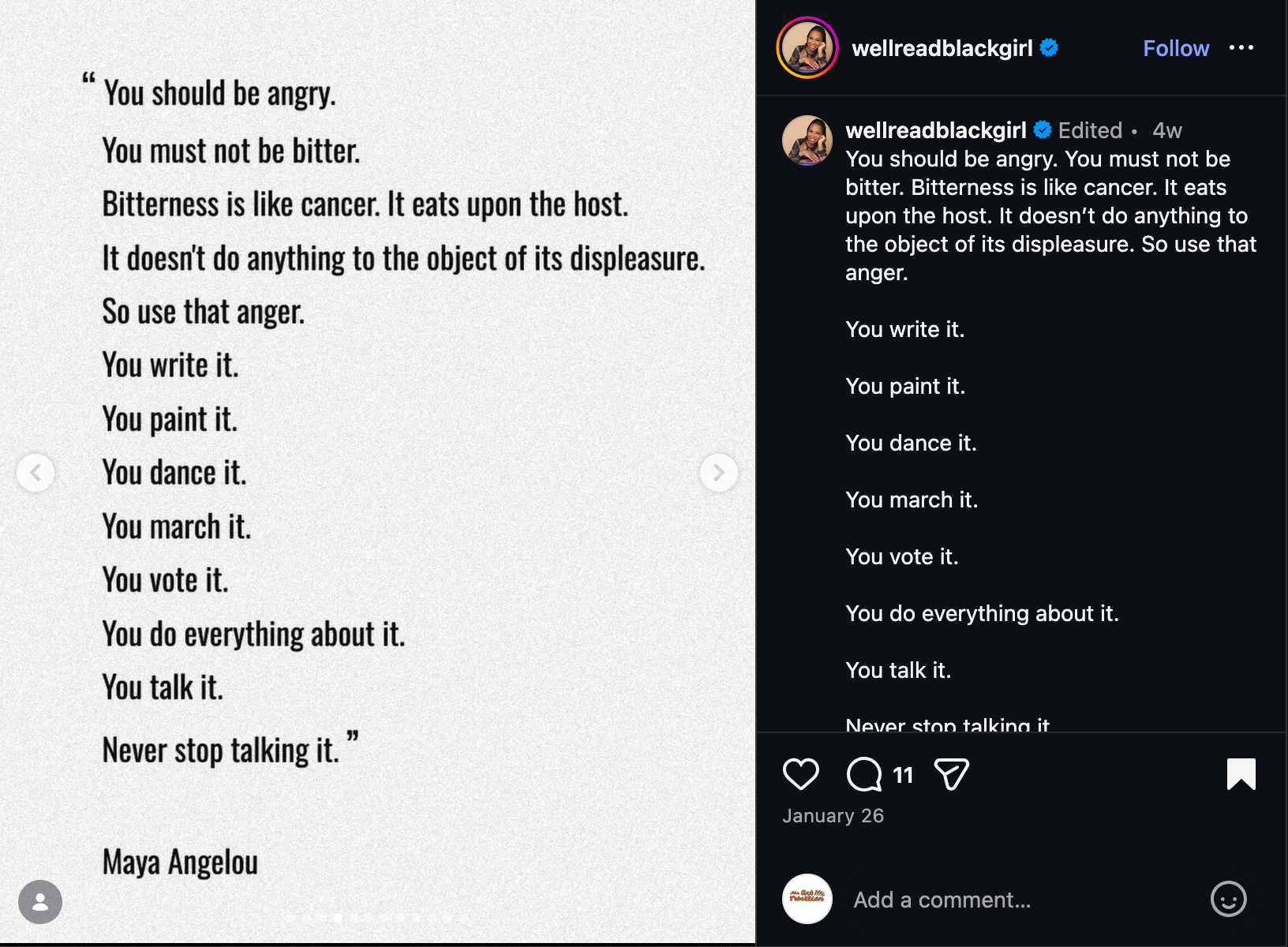
But I’ve also been reminded over and over, about the power of making, creativity, and the importance of community. Of fighting back in small ways, however your spirit feels called to do so.
I loved this video essay by Chicago-based visual artist and organizer Monica Trinidad: “Art is not enough — and still you need to make it.” In the video, she recommends “Read This When Things Fall Apart,” a collection of letters written to activists in crisis, edited by Kelly Hayes.
I’m in the middle of reading the book now and the first letter, written by organizer Mariame Kaba, directly addresses despair and hope. Kaba writes:
These days, people around me are using the word ‘despair’ with regularity. Perhaps you are experiencing the same. Given the stakes, I can understand being despairing. Yet I’m with Audre Lorde, who wrote that ‘despair is the tool of our enemies.’ Why do I believe this? Because despair has a way of distorting, it often pairs well with cynicism, which I see as a way of being that contracts what’s possible rather than expanding possibilities. Rather than being enabling, I have experienced it as corrosive.
Are cynical people builders? I haven’t experienced them as such … It’s my experience that taking positive collective action can crowd out despair. It offers a little bit of light and helps you perceive yourself and your community more clearly.
Recently, I participated in a virtual panel highlighting artists in the economic justice space, thoughtfully organized by cultural worker, Nati Linares. I felt so inspired and energized hearing from my co-panelists including Austin Robey, the founder of Subvert, a music marketplace collectively owned by musicians, labels, and individual supporters; Sage Crump, director of the Department of Racial Justice and Movement Building at the National Performance Network; and Ray Wei, co-founder of The Conscious Citizens, an online hub of information dedicated to building community power.
I continue to meditate on connection and community and how to build that through the art rebellion. And in that spirit, I’d love to connect. If we haven’t talked in a while, or if you’d like to say hello, reply and let me know. I’d love to hear how you all are doing and what you’re working on.
In other news
I’m beginning to publish a backlog of Artist $napshots — here’s a glimpse into the finances of a visual artist and recent college grad in Chicago.
Survey
Art Practice: Painter and freelance designer
Location: Chicago, IL
Age: 22
Pronouns: she/her
 Makeda Easter
Earnings
Income:
$1,300 to $2,000 a month
How much of your income is from your art practice?
20%
Where does the rest come from?
I'm a part-time substitute teacher and I make $21/ hour.
How much did you make from recent art-related gig work?
My last two clients were a smoke shop and a fashion brand. I made $330 from the smoke shop and $700 for the brand.
How do you price your work?
For my freelance design work, I have my price set at $105 for each original custom clothing design.
Expenses
Housing:
I live with 3 other roommates, so my rent is $625.
What are your major monthly expenses?
My largest expenses outside rent are my four different credit card payments and my iPad payment plan. My monthly payment for all cards is about $200 each and my iPad is about $120 a month.
Do you have any monthly expenses related to your art practice?
I use my iPad for my design freelance which is $120 and Adobe Photoshop which is a monthly bill of $23.
Larger financial picture
Do you have any financial support from outside sources?
None
Have you received any grants to support your art?
None
Do you have health insurance?
None
Do you have any debt?
Yes. I was unemployed for 3 months last year that accumulated into $13,000 in credit card debt.
Do you have any savings?
Trying to start a saving account so far about $400 in savings.
Q&A
How do you feel about your financial security right now?
I'm starting to get the hang of it. I work as a substitute teacher, and I also do some freelance work on the side. Lately, that's been picking up a little bit more working with different brands, so that's been giving me a better sense of security. But I was unemployed for about 3 months earlier from June to September [2024], so I wasn't financially comfortable. And now I'm starting to feel a little bit more comfortable with everything.
How much money would you need to earn to live comfortably?
Ideally, if I could make up to $80,000 a year on just my art, I would live a little bit more comfortably. I've never been someone who needs to have the most money in the world, but being able to [manage] my day to day, pay off my bills, and things like that.
 Makeda Easter
Linky links
- Springboard for the Arts is inviting artists and culture bearers in Minnesota to apply for funding to support projects that help neighbors find sanctuary places in their communities.
- In late January, arts organizations joined hundreds of other Twin City businesses in an economic blackout in protest of ICE.
- This essay by Damien Davis argues that application fees are one of the least examined but most pervasive forms of class stratification in the arts.
- Only 1 in 4 of Chicago’s indie music venues is profitable.
- A beautiful analysis of Bad Bunny’s Halftime show, and the intersection of art and politics.
- Queer & Trans Wealth guides on how to start a susu fund, how to protest ICE with your tax dollars, and how to start saving for retirement.
As always, thanks so much for reading. I’m wishing you all softness during these hard times.
See y’all next time ☀️
Makeda