$napshot of a creative reuse space
$1,300 on rent, and all staff make $24 an hour — the cost of running a creative space.
These days, it feels like the words “third space” and “community” are everywhere. It makes sense though. With increasing isolation, the cost of living crisis, splintered realities driven by algorithms, and the prolonged devastation of the pandemic, people are desperately craving genuine connection.
Artists have found really creative and beautiful ways to bring people together — from intimate gatherings in parks and apartments, to opening physical spaces for arts events.
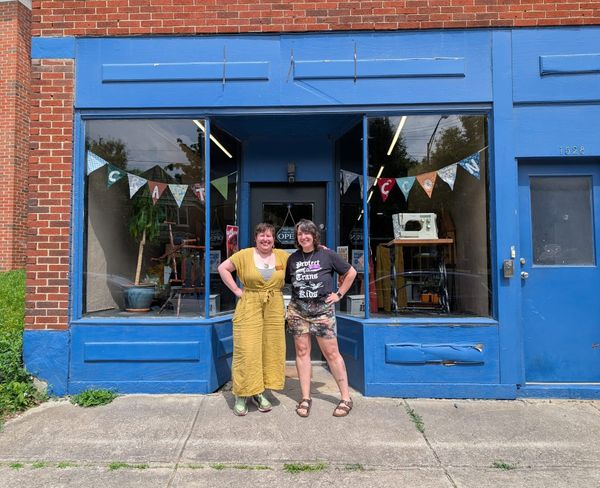
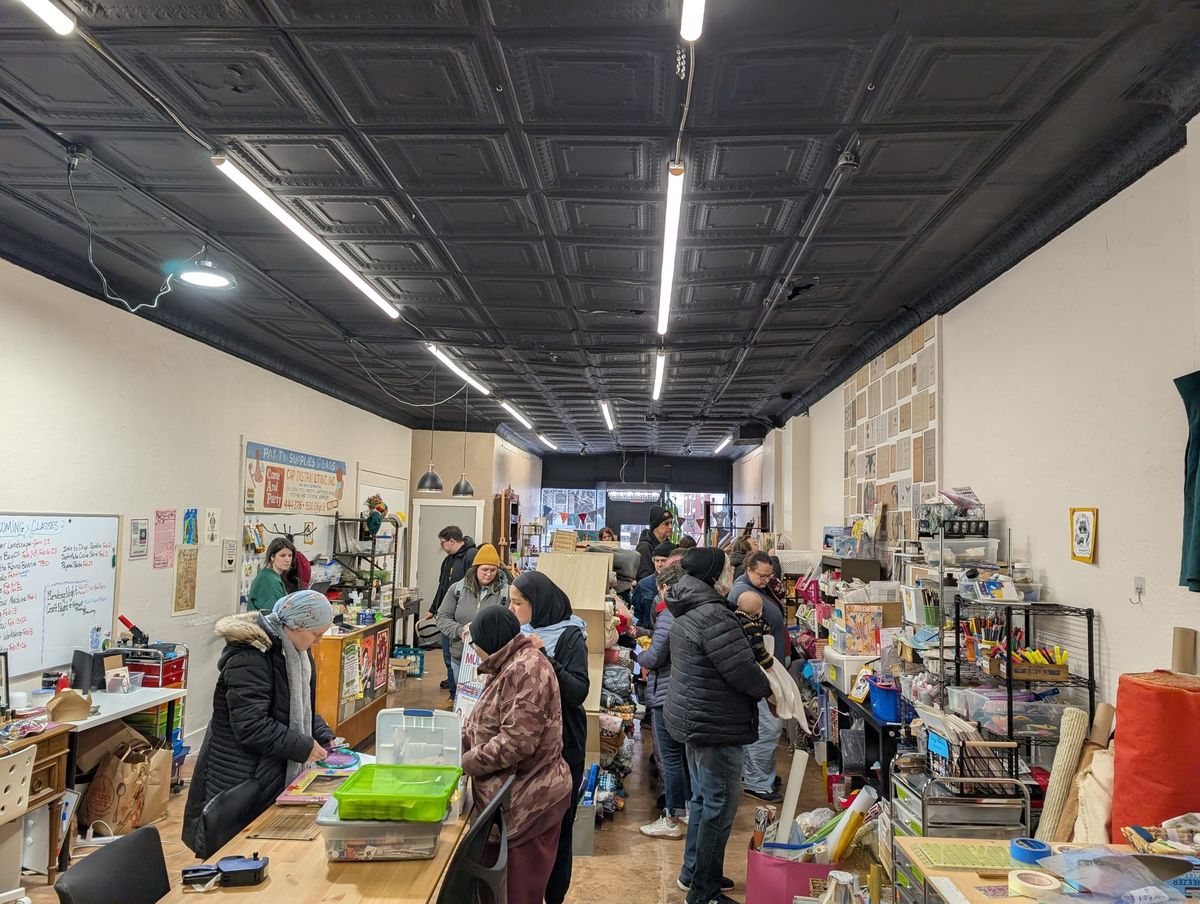
I recently spoke with Rachel Wallis, a textile artist and longtime friend of the art rebellion about Craft Raccoon, the creative reuse shop and community studio she opened in Columbus, Ohio nearly a year ago.
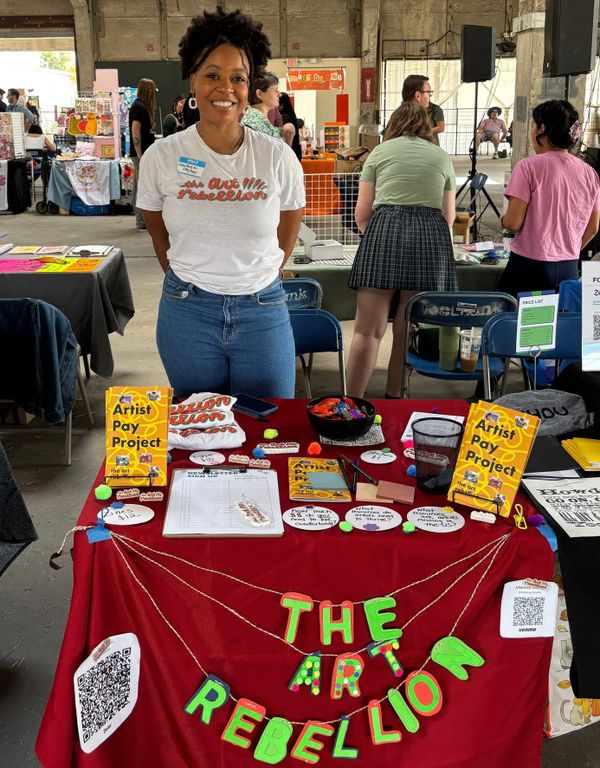
 Makeda Easter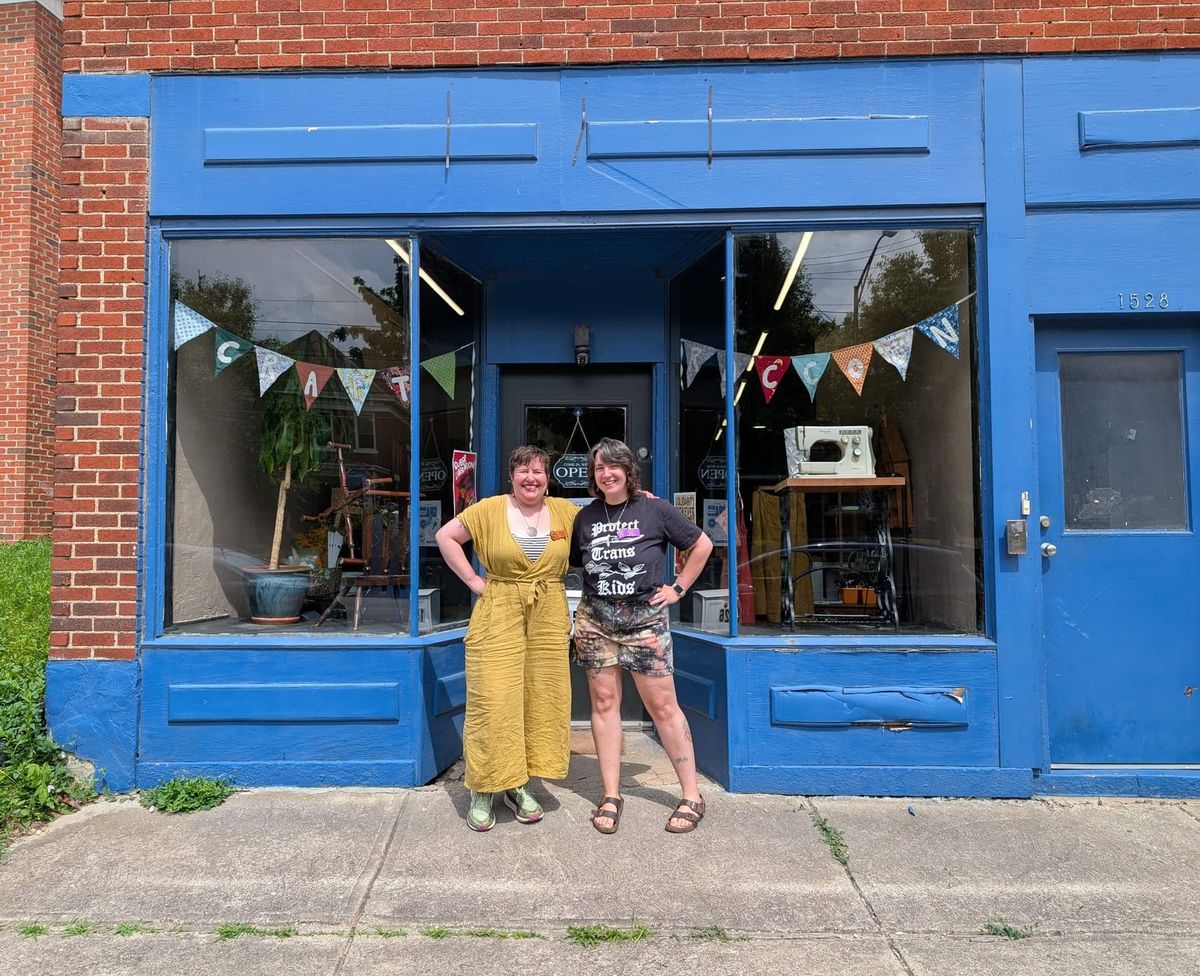
As an organizer focused on racial and social justice, Rachel is dedicated to making Craft Raccoon an egalitarian workplace that reinvests back into its community.
Check out my full interview with Rachel where we dive into the economics behind opening and running a creative space, how it's impacted her artistry, and her experience navigating business ownership as an artist.
Here's an excerpt:
Major Expenses
Renting the space: $1,300/ month
When I first put together my business plan, I was working with a realtor. I gave the business plan to the realtor to give to the landlord, and he was like, “you have to say you're going to say you're gonna make more profit than this.” I was like, “I just want to break even.” I'm just making these numbers up. We blew those numbers out of the water.
We've been really lucky. We opened right as Joann’s was closing. The neighborhood we're in is really underserved in terms of arts and crafts resources, so there's been a huge response from people. We've got a ton of people coming through every day. Our rent is really low by Columbus standards, so we pay $1 per square foot for the space that we have.
Paying employees: Craft Raccoon has four employees, two are full time, two are part time. All make $24/hr.
We really want it to be a living wage for Columbus. We started out at $16 an hour, and based on profits, how things are going, and what we can afford to do, we've increased the pay.
On health insurance:
We're not able to give health insurance right now, but that's something that both ourselves and Dye Mad Yarns, our neighbors, are really thinking about. We're all lucky that we're all able to be insured through our partners, both there and here. But that's not the values we have, and that's not a viable long term solution. That's going to be the next big step, thinking about health insurance. Thinking about whether we would be able to start a health insurance cooperative with other small businesses in the area and offer those kinds of benefits.
Other expenses:
Pretty much everything that we sell is donated. Our expenses are things like insurance, subscriptions, and internet. We buy a lot of Ziploc bags and rubber bands — our main way to store things in as we put them out.
Unexpected expense, the basement: ~$10,000
We got a fire code violation because the floor joists are exposed in our basement. We're not allowed to store anything there, which is a really huge part of our functional business model. It was not something that the landlord was interested in addressing. He was like, “the lease doesn't say anything about the basement. If you want to make changes to that, you can, but my suggestion is find some place else to store your stuff.” So we're putting in a ceiling and some walls into the basements to make us pass the fire code. We'll see, but it's ultimately going to cost about $10,000. The great news is that we have the money to pay that.
As an artist and organizer whose work engages with social justice, how does that influence the way you run Craft Raccoon? How do you run a business in line with your values?
Although we're structured as an LLC — I am the owner of Craft Raccoon, technically, it all belongs to me — it doesn't feel like it belongs to me. We're trying to work on structures to make sure that we're accountable to the community. We have a board, we have bylaws, we have a mission statement. Our goal is to reinvest profits back into the community.
Everyone who works there earns the same wage, including me. Really trying to make it an egalitarian workplace. We're working on developing an employee handbook that the employees are helping write, the board is helping write, so that everybody has a say in what kind of working environment they want to be a part of. We're also reaching out to restorative justice practitioners in the community to see if we have somebody on hand for conflict resolution, so that we have structures in place to address internal and external conflicts in ways that match our values.
Even thinking about things like, what is our policy on emergencies? Do we call the cops? We made a choice not to get a security camera, because I don't want to be a part of that. In some ways, it's easier for us because everything in the shop is donated. If someone wants it, that's fine. My concern is that somebody is going to break a window and we're going to have to replace the window. What if that happens? That'll be fine too.
Zine for sale
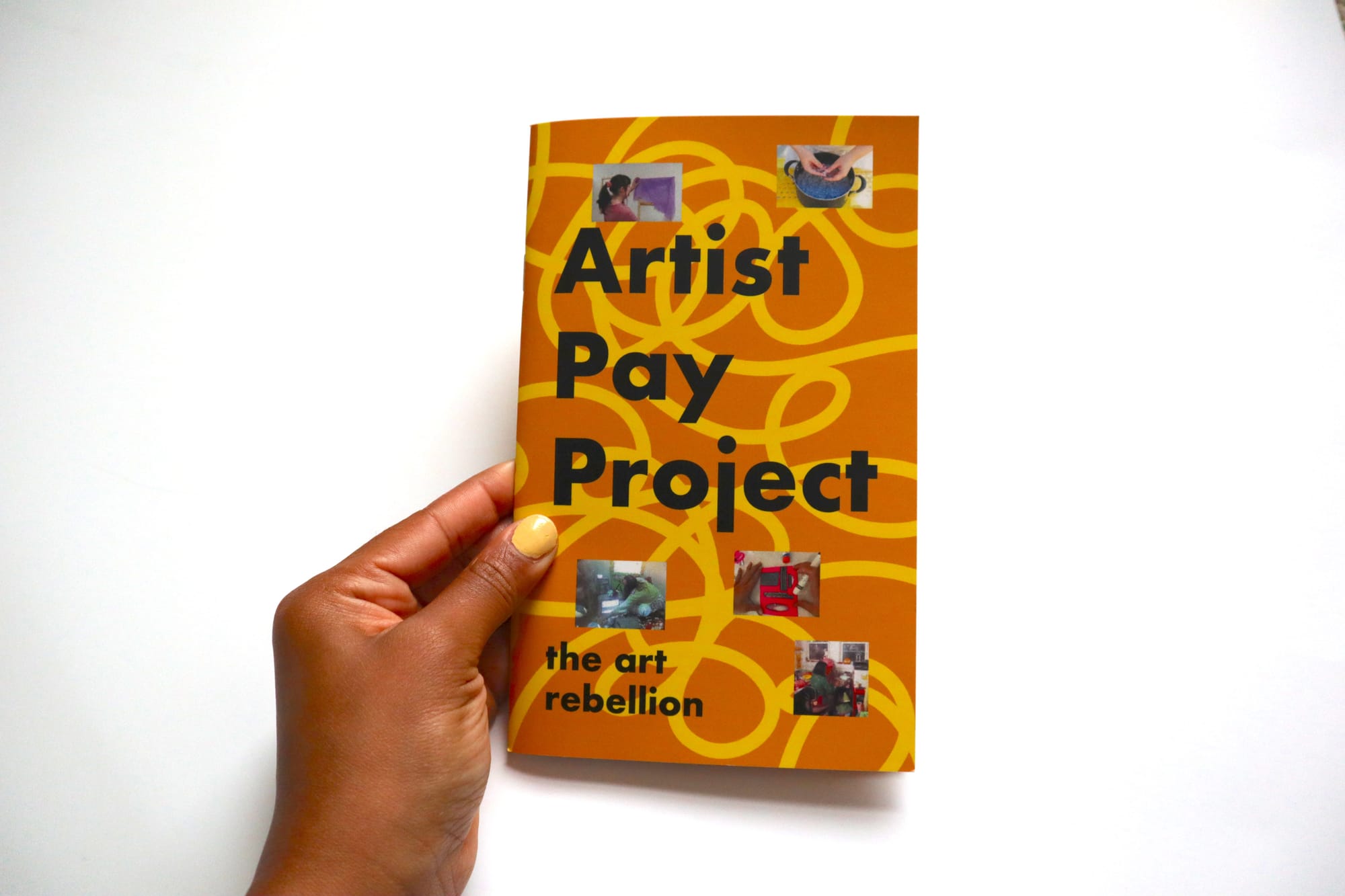
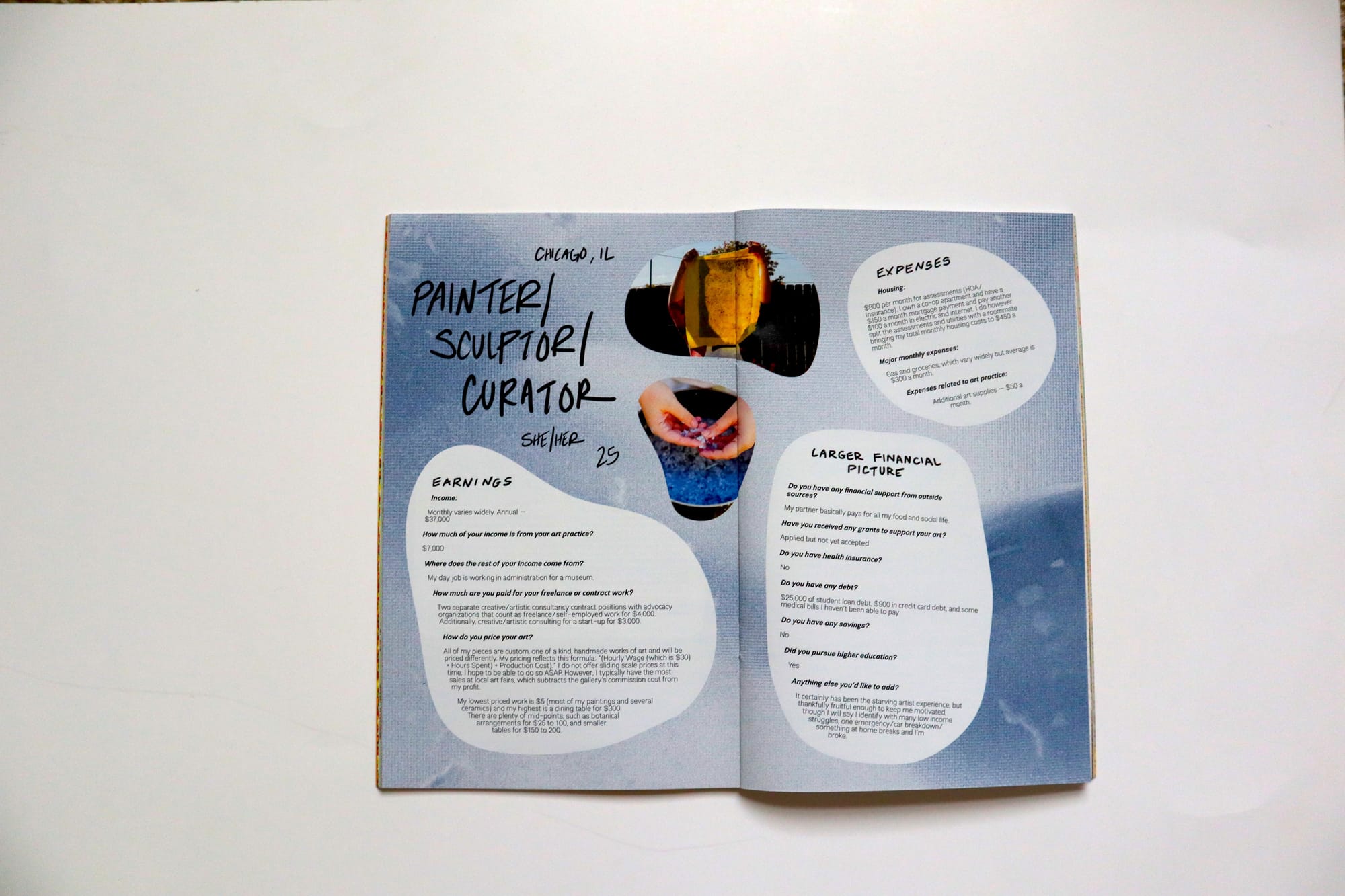
The Artist Pay Project zine is officially for sale! Beautifully designed by Themselves Press, the zine features interviews with 10 artists from across the U.S. about how they make a living and pursue their art.
Zines are $18, and if you’re interested in buying a copy, reply to this email and let me know.
Linky links
- This piece in the Baffler, detailing the financial compromises and emotional costs involved with pursuing a writing career.
- A newsletter devoted to interviews, essays, and conversations about how writers are surviving.
- Reading “Death of the Art School” in Hyperallergic reminded me of the main argument in the book, “Bullshit Jobs” by David Graeber, basically, that a frighteningly large percentage of what we call work exists in a meaningless pyramid scheme.
- In addition to students being referred to as consumers, this statistic is particularly grim: “A study by the American Association of University Professors has shown that between 1976 and 2011, non-faculty professional positions, especially in student services and administration, grew by roughly 369%, while full-time tenured and tenure-track faculty grew by only 23%.”
- Community-owned venues are key to the survival of grassroots music scenes.
- In “I-see-my-future-and-it’s-bleaker-than-I-imagined" news, this Wired essay details the dystopian experience of training AI models as a contractor.
As always, thank you for reading. I always appreciate your support. Oh, and happy belated May Day! 🌞