$napshot: Columbus-based creative reuse shop and community space
the art rebellion spoke with Wallis about what it actually takes to run a shop and community space — the costs, the challenges, and what makes it worth it.
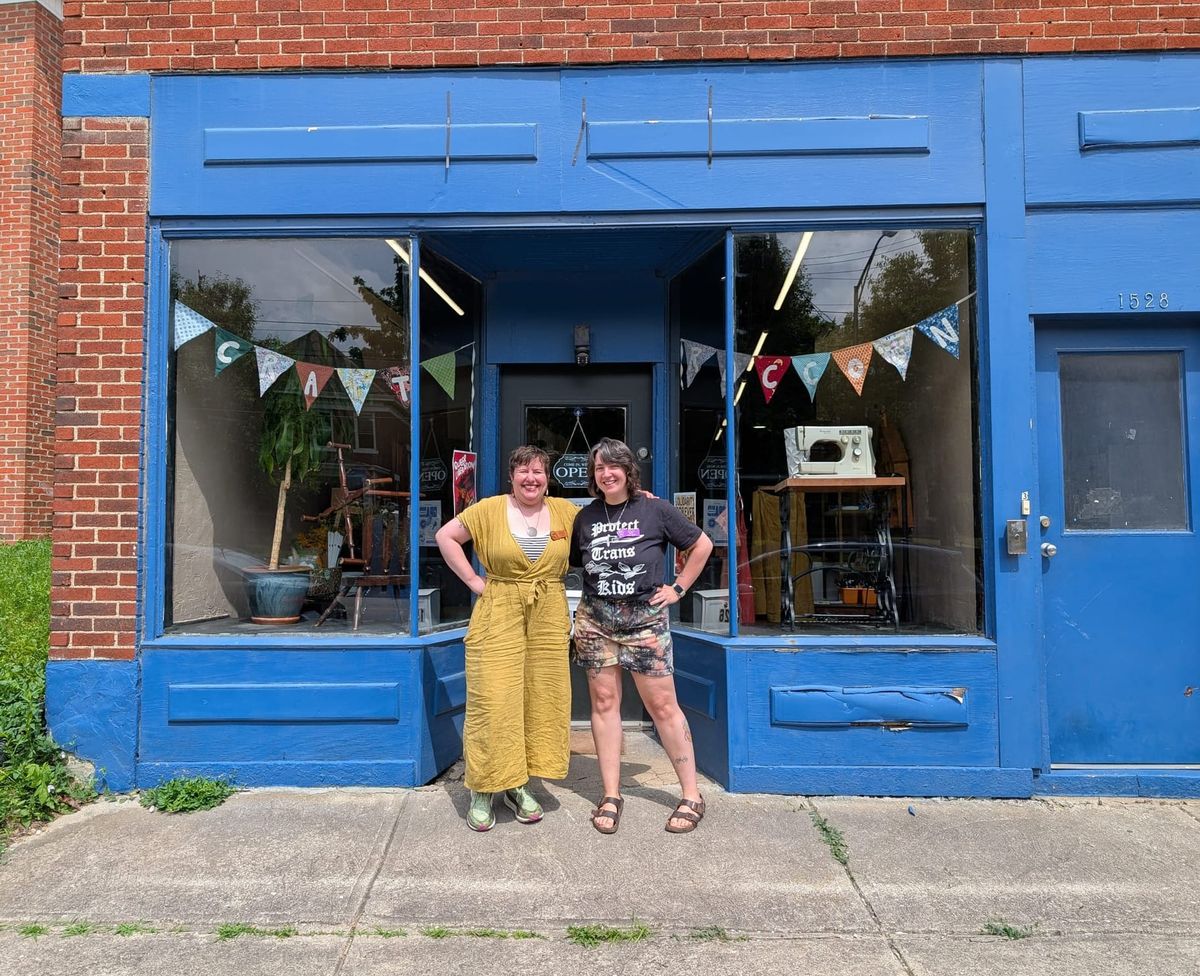
Rachel Wallis is a textile artist, activist, and the founder of Craft Raccoon, a creative reuse store and community studio in Columbus, Ohio.
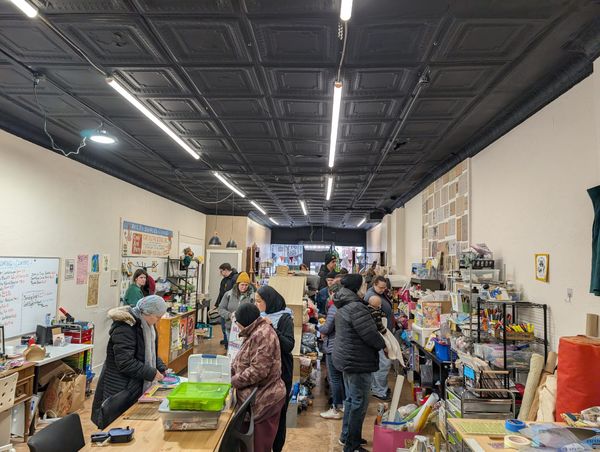
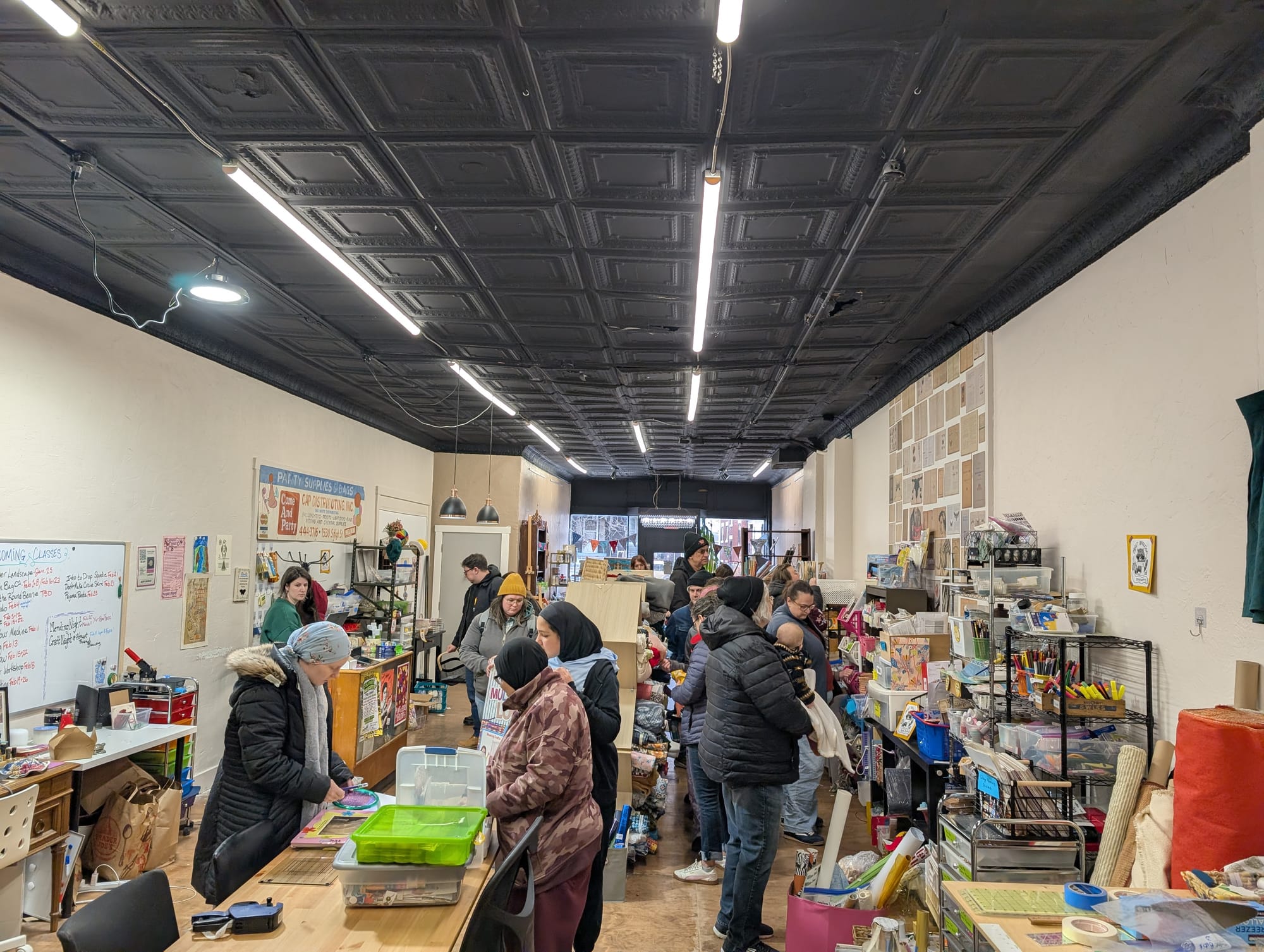
Opened in June 2025, the shop collects gently used art and craft supplies — including paint, ceramic tools, and yarn — saving them from the landfill and offering them at a low cost. Craft Raccoon also offers art classes and fosters connection through events like community mending nights, plant swaps, and an arts and politics book club.
the art rebellion recently spoke with Wallis about what it takes to run a shop and community space — the costs, the challenges, and what makes it worth it.
Watch the full interview:
Craft Raccoon is inspired by other creative reuse spaces, like the WasteShed, a nonprofit in Chicago that collects reusable art and school materials and makes them available at low or no cost. Years of working in a traditional fabric shop in Columbus had also given Wallis deeper insight into the business of crafting.
“A lot of people turn to crafts because they're burnt out on hyper-consumption and consumer capitalism, but get caught up in another kind of hyper-consumption, consumer capitalism that the craft industry really had drawn on,” she says. “I was feeling more and more aware of the sheer quantity of stuff that was passing through my life, that I was selling to people.”
When a space opened up in the same building as Dye Mad Yarns, a shop co-run by a friend, Wallis saw an opportunity. But deep in mourning after her mother's passing, she wasn’t prepared to open a business. So she made a deal: “I'm going to give myself six months. And if the new year comes and the spot is still open, then maybe it's meant to be,” she says. “And it was.”
Since opening last year, Craft Raccoon has quickly become a popular spot for Columbus’ creative community. Wallis is thrilled when customers return to show off what they’ve created using items from the store. “Somebody came in just the other day wearing a cardigan that they had made, and was like, ‘this is my sobriety sweater. I worked on it the entire time I was in rehab. I just wanted you to see the thing I made with materials I got here.’”
As an artist whose work engages with issues of racial and social justice, it’s been important to reinvest back in community through Craft Raccoon, for instance through food drives, and monthly protest banner workshops where all proceeds are donated to the abortion fund of Ohio. Opening the space has become yet another facet of her own art practice.
 Makeda Easter
Here, Wallis breaks down the major costs and experience of running Craft Raccoon.
Major Expenses
Renting the space: $1,300/ month
When I first put together my business plan, I was working with a realtor. I gave the business plan to the realtor to give to the landlord, and he was like, “you have to say you're going to say you're gonna make more profit than this.” I was like, “I just want to break even.” I'm just making these numbers up. We blew those numbers out of the water.
We've been really lucky. We opened right as Joann’s was closing. The neighborhood we're in is really underserved in terms of arts and crafts resources, so there's been a huge response from people. We've got a ton of people coming through every day. Our rent is really low by Columbus standards, so we pay $1 per square foot for the space that we have.
Paying employees: Craft Raccoon has four employees, two are full time, two are part time. All make $24/hr.
We really want it to be a living wage for Columbus. We started out at $16 an hour, and based on profits, how things are going, and what we can afford to do, we've increased the pay.
On health insurance:
We're not able to give health insurance right now, but that's something that both ourselves and Dye Mad Yarns, our neighbors, are really thinking about. We're all lucky that we're all able to be insured through our partners, both there and here. But that's not the values we have, and that's not a viable long term solution. That's going to be the next big step, thinking about health insurance. Thinking about whether we would be able to start a health insurance cooperative with other small businesses in the area and offer those kinds of benefits.
Other expenses:
Pretty much everything that we sell is donated. Our expenses are things like insurance, subscriptions, and internet. We buy a lot of Ziploc bags and rubber bands — our main way to store things in as we put them out.
Unexpected expense, the basement: ~$10,000
We got a fire code violation because the floor joists are exposed in our basement. We're not allowed to store anything there, which is a really huge part of our functional business model. It was not something that the landlord was interested in addressing. He was like, “the lease doesn't say anything about the basement. If you want to make changes to that, you can, but my suggestion is find some place else to store your stuff.” So we're putting in a ceiling and some walls into the basements to make us pass the fire code. We'll see, but it's ultimately going to cost about $10,000. The great news is that we have the money to pay that.
Start up costs
We did a GoFundMe that raised $5,000, and that was basically the opening expenses we needed. We put in new lighting. That was $2,000, and then buying shelving and things like that, so [the money we raised] was able to pay for that.
The year before, I had set up a Patreon for a project called “Year of Repair” that was about reuse and repair, justice mending. I had fundraised for a larger project, then my mom died, and it ended up being a much smaller project. I also had about $4,000 left over from “Year of Repair,” money that I had raised from individuals. I was able to put that towards opening the store as well to give us a little bit of a cushion.
I was incredibly lucky. I was able to start paying myself from day one. I didn't need to go into my savings to be able to do this. But I have a partner who is a college professor who has a stable, well-paying job. So I was also in this situation where I knew that if I didn't earn money for the first six months that we were doing this, we would be okay. That sort of financial stability gave me the ability to jump into this without really knowing what the outcome was going to be.
As an artist and organizer whose work engages with social justice, how does that influence the way you run Craft Raccoon? How do you run a business in line with your values?
Although we're structured as an LLC — I am the owner of Craft Raccoon, technically, it all belongs to me — it doesn't feel like it belongs to me. We're trying to work on structures to make sure that we're accountable to the community. We have a board, we have bylaws, we have a mission statement. Our goal is to reinvest profits back into the community.
Everyone who works there earns the same wage, including me. Really trying to make it an egalitarian workplace. We're working on developing an employee handbook that the employees are helping write, the board is helping write, so that everybody has a say in what kind of working environment they want to be a part of. We're also reaching out to restorative justice practitioners in the community to see if we have somebody on hand for conflict resolution, so that we have structures in place to address internal and external conflicts in ways that match our values.
Even thinking about things like, what is our policy on emergencies? Do we call the cops? We made a choice not to get a security camera, because I don't want to be a part of that. In some ways, it's easier for us because everything in the shop is donated. If someone wants it, that's fine. My concern is that somebody is going to break a window and we're going to have to replace the window. What if that happens? That'll be fine too.
What advice would you give to other artists or creatives who dream of opening their own community arts space?
For me, it's really about the community part of it. There's absolutely no way I could have done this alone. Every part of it has been drawing on the experience, the ideas, the commitment, the sweat, the emotional support of the people around me. The more that you can really ask for help and tap into the community you have, the easier it's going to be.
Read more about the Artist Pay Project.